
I'm cycling 100 miles on Sunday 4 October to change young lives!
I have foolishly signed up for the Palace to Palace 100 Ultra (100 mile) cycle event in October, so that you don't have to.
On this page I will be providing updates on the training and preparation involved for this, as well as a summary of the big day itself. Hopefully this can demystify the process of doing something like this, and provide documentary evidence that I am doing something to justify soliciting donations. You, the reader, are invited to read it, suffer vicariously through me, and have the opportunity to get a warm glow from donating to a great cause (the King's Trust - see details below) - without the need to endure the rain, the potholes, or eight hours outside on a hard plastic saddle with no suspension.
__________________________________
At a time where almost a million young people in the UK are out of work, The King’s Trust are committed to ending youth unemployment, and I’m doing my part by taking on Palace to Palace! I’ve challenged myself to cycle 100 miles across London and raise funds to help young people get into work.
The King's Trust (formerly known as The Prince’s Trust) is a youth charity providing long-term support and tailored programmes that empower young people across the UK to transform their lives. Every penny raised will help break down barriers, open doors and support young people to build the confidence and skills they need to find work.
Please help me support The King's Trust by sponsoring my Palace to Palace challenge and sharing my page to double the impact. A donation of £26 could cover the cost of travel for an isolated young person to attend a one-week King’s Trust course, helping them build vital skills and gain valuable work experience.
My Achievements
Raised £50 in The King's Trust 50th anniversary year!

Received 10 donations

Updated profile picture

Shared fundraising page

Made a self donation

Half way there!

Fundraising target achieved!

Raised £300!
My Updates
Training Blog 2 - 22nd-30th August
Friday 4th Sep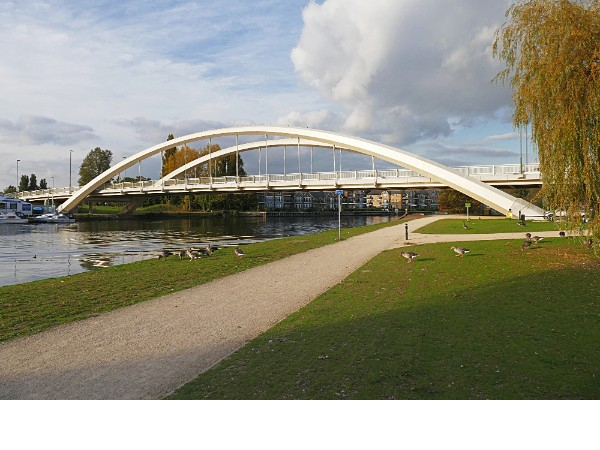
Some training updates & ruminations for those following the journey:
22-23 Aug – A weekend to disappoint my investors/donors– I didn’t make it out for an intensive training ride. Instead, I went for a nice walk up to Devil’s Dyke in the South Downs, where the birdseye view of yellow, drought-stricken Sussex countryside made me so thirsty I had to stop for a pint in the sun before going home. On the Sunday I did manage an up-tempo 50-odd [44] kilometres in loops around Richmond Park to keep my legs spinning, but didn’t make any real progress in terms of preparing for the event itself. In my defence, my legs were a bit sore from walking in the hills, so perhaps it will count as cross-functional training or something.
30 Aug – despite the apocalyptic bank holiday weather forecast I made it out on the Sunday morning for a 110km ride (just shy of 70 miles) without getting rained on. Helpfully I was able to incorporate a recce of some of the roads used in the second half of the Palace to Palace route, taking me out almost to Guildford and back again via some of the busiest, fumiest A-roads in southwest London and metropolitan Surrey. These would normally be the sorts of roads I would try to avoid when out cycling, and I hope on the day of the event the traffic is a bit lighter than it was this weekend, as there will be quite a few inexperienced riders navigating some very awkward and congested junctions and roundabouts. However, one bright spot was that I cycled over Walton Bridge, which I had never visited before and can recommend to fans of shiny new bridges over the Thames.
Lessons from this training block:
1. The importance of hydration and food
I found the long ride quite tough – I didn’t take enough food and didn’t drink enough water, stopping only for an ill-advised flat white from a coffee van in the Surrey hills. This didn’t sit well at all in my stomach, partly because caffeine and hot milk is a terrible combination during exercise and partly because it cost me nearly five quid. The logistics of eating and drinking can be difficult when you’re out for a solo ride on unfamiliar roads, as stopping to fill up bottles or buy food generally means leaving the bike outside a shop, unsupervised and unsecured. Additionally, by the time you realise you’re hungry and dehydrated it is usually too late, and it can be tough to get liquid and sugar on board fast enough to keep up with the rate you’re getting through them while moving. This is a timely reminder for me that getting the P2P ride done will involve not only a certain level of cycling fitness but also concentration, discipline and organisation – packing food, identifying my water stops ahead of time, and ensuring I eat and drink regardless of perceived hunger and thirst in the moment. It might sound like a good problem to have, but you can only force-feed yourself so many Tunnock’s caramel wafers before you’re unable to look one in the eye ever again.
2. Motivation
Another characteristic of preparing for an event like this is that training means regularly going out by yourself for quite a long time, and if your heart isn’t in it on a particular day, the hardest thing can be motivating yourself to get out the front door. My inability to go out on the morning of Sunday 23 August is a good example of this (instead I went out in the evening and so had to get myself home in the dark while wearing sunglasses, like a lycra-clad Blues Brother). There are a lot of steps involved in going for a training ride – getting up early, digging out my shorts and jersey and silly clip-in shoes, finding contact lenses, checking tyre pressures, charging electronics and making sandwiches – all of which you have to do without succumbing to the much simpler alternative of sitting on the couch and eating crisps. Assuming you do make it out on the bike, you’re then outside on your own for anything between four and ten hours, exposed to the weather and the traffic. Even training for a marathon – caveat, I’ve never done one – you’re unlikely to go out running for much more than three hours at a time, even if those hours of running involve much more intense effort, and it’s a bit easier to listen to music or otherwise distract yourself. A long-distance cycle, by contrast, is more like sitting down for a full day of focused audit work in the middle of a busy road, on a hard plastic seat that’s three inches wide.
Along these lines, one of the hardest bits of the training ride described above was that the route doubled back on itself a few times, and I have to admit that I came quite close to abandoning the ride at a couple of points where it took me first onto familiar roads towards home and then off in a different direction through some strange part of town. I’d like to say the King’s Trust’s mission of helping young people across the country motivated me to tough it out, but realistically it was fear – the shame of a blog post detailing two straight weekends of inability to stick to the training plan, and the embarrassment of signing up to the longest possible route for the Palace to Palace event and then DNFing because I hadn’t trained. This is therefore a success for the blog’s function as an accountability mechanism, as detailed last week. Hopefully it can also contribute to one of the blog’s other functions, namely to encourage sympathetic readers to donate for a good cause using the big Donate button over on the right hand side!
Training blog no. 1
Friday 21st Aug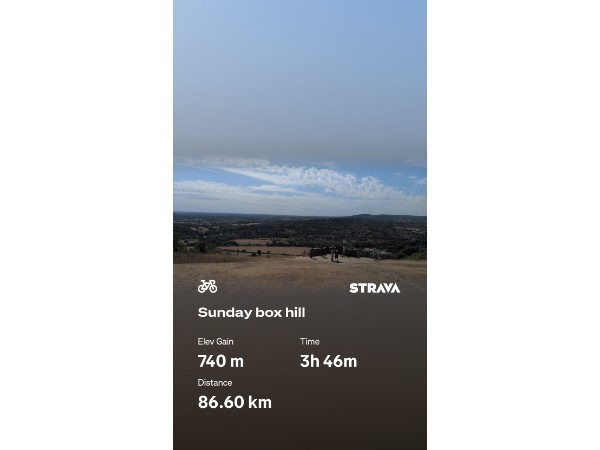
Training update 16th August
The helpful people at the King’s Trust provided us with a detailed and comprehensive training plan, set over the twelve weeks leading up to the big ride and covering things like mixing long slow rides with short high-intensity stuff and managing sleep and diet. We have been assured that if we diligently follow this training plan, we have nothing to worry about on race day. I have arrogantly ignored this advice, done essentially nothing for the first four weeks of this period (including two weeks on holiday, mostly eating chips), and now have to play catch-up. Audit colleagues will note that this is highly out of character. The training plan is to ramp up distance with long rides on Sunday mornings, and try to get out during the week for a short more intense ride where scheduling and weather allow.
I have so far managed three training rides – one evening zip around Richmond Park and then two longer rides, from Battersea (home) down to Box Hill and back over the last two Sundays. While the trip round the park was primarily aimed at shaking off a bit of rust (literally and figuratively for the bike and me respectively), the Surrey rides were distance training efforts. These covered about half the distance of the event ride (~50 miles) and about two-thirds of the elevation of the final ride (~750m – for any non-cyclists reading, it’s generally the hill climbing that kills you and not the distance). My hopes that riding the same route two weekends in a row would just sort of lead to performance gains without me trying were dampened when I noticed that I managed to complete both in 3hours 46 minutes of moving time* (although the second time did involve a bit less time spent sitting on the floor outside a newsagent’s, eating Mars bars** and feeling sorry for myself).
Conditions on the first of these trips were a little tough – very hot and dusty – though it had cooled down slightly by the time of the second, on the 16th of August. Richmond Park in the middle of a drought had the look of the wilderness in a much warmer country, and the normally verdant fields of the Surrey hills had a distinctly yellow shade to them. Readers hoping to learn of misery and suffering will therefore have to wait to read of me getting soaked while training in the rain. The good news is that my bike still works after a long period of disuse, I have remembered how to ride it, and have set a training baseline to build on.
Accountability bit incoming - this weekend, the aim is to get back out and add ~10 miles. In the meantime, if you would like to contribute to my fundraising pot I would be very grateful (and so would the young people the King’s Trust helps!). Along with general feelings of warmth from giving to charity and helping a colleague, an added bonus is that this will allow donors to be personally invested and therefore entitled to chase me for deliverables (blog posts covering topics or answering questions, and/or evidence of training injuries) and mug me off if I don’t produce them.
Footnotes:
* Moving time and Elapsed time are statistics recorded when measuring rides on Strava (or similar). The app will automatically stop timing when you stop for food and a rest and then restart once you set off again, renewed and refreshed. Being liberal with such breaks can lead to recording an ostensibly impressive Moving time, but the Elapsed time measure (the time between setting out and getting home, regardless of what you do in between) will inevitably give you away (see the ‘Ross Barkley 5K’). In practice, a good moving time is irrelevant for my purposes, as it will do me no good to take a two hour break for lunch and a nap if it causes me to miss the cut-off, and therefore the pints, at the end of the race.
**although this is a sporting and fitness endeavour, the nice thing about cycling is that you’re encouraged to eat as many Mars bars/cakes/sandwiches as you are able – the ride on race day will probably burn 4-5,000 calories and training rides will be a similar magnitude, and failing to stuff my face with carbs will seriously endanger my chances of finishing the ride.
Intro to the training blog
Friday 21st Aug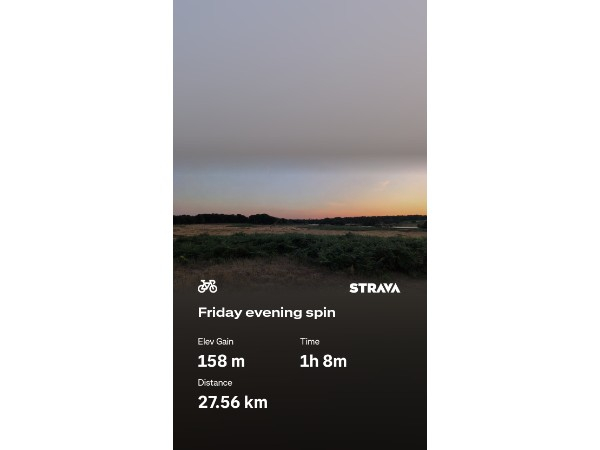
I have signed up to ride in the King’s Trust’s Palace to Palace bike ride (4 October) as part of the Santander contingent. Entrants raise money through donations to the King’s Trust (see big green “Donate” button to the right) so that they can continue to do their good work as a charity and I get to ride my bike (which has no suspension and a very hard saddle) from central London to Windsor and back on race day.
Fortunately for everybody except me, I am doing the longest route they offer, a 100 mile* ride which adds distance by means of a detour around some of the steepest hills in the metropolitan green belt on the way home, right at the point where I’ll probably be quite tired. Hopefully this will only take about eight hours, so that I have time for a couple of pints in the closing festival at Battersea Park.
The blog
Although this isn’t actually that far away now, my intention is to write a few blog posts, primarily so that I have some content to send to people as part of my virtual bucket-shaking emails, but also:
- 1. Assurance – keeping interested readers and potential donors happy that I am doing some suffering to earn my donations
- 2. Accountability – if everybody knows I’m supposed to be training it will be harder to justify skipping a training ride
- 3. Insight – giving readers some idea of what an event like this involves, so maybe this time next year they’ll be more confident in signing up for one of their own. I’d love to answer any questions people have.
Footnote:
*100 miles = roughly 160km. Anybody reading this probably knows that already, but while the ride is advertised as being 100 miles, accepted practice among cyclists is to use the kilometre figure as it is a larger number and therefore sounds more difficult. I will therefore adopt the convention of using the smaller figure (miles) in the early stages of my training journey to build a bit of jeopardy, and transition to the more impressive kilometres as race day approaches.


Well Done Mike, enjoy the bike ride!